Saturday, December 4, 2010

My rich and fulfilling fantasy life

Cover of McCall's magazine (1911)Image via Wikipedia
It is my habit, in times of stress and overwork, to imagine a life in which I have free time and sufficient energy and concentration to do something with it.

In that imaginary life, I'm the kind of person who faithfully goes to bed at 10 or at latest 11, and gets up early to go for a run, because my classes have all been prepared the evening (or possibly even the week) before, so there's never a mad a.m. scramble of dear God I thought I had that lecture somewhere OMG I haven't even read the text yet where are the images! I was supposed to make up the exam when? and life proceeds on an even and cheerful keel and I even have time to get dinner going first thing in the morning, make the children's lunches, make sure they've got their homework (which, in this fantasy life, I helped them with the night before) and wave them off to school with a cheery smile before heading out myself.  In this fantasy I am already dressed and have had breakfast before the children get up.  In this fantasy, I suspect I got up at 4 a.m. But whatever.

In the fantasy, I have ample free time and the concentration and energy to do something with it. I'm not spending all this extra time that has mysteriously appeared in my life writing (or even reading) for publication, because the very thought of doing that causes me enough anxiety that I hastily shy away from it. I mean I can't even imagine, as a fantasy, enjoying doing that. And I truly do not enjoy reading most of the things that are published in my field anyway. These activities have no place in a fantasy life; they are very much Real World. They may be why I fantasize in the first place.

In this fantasy life, I sew a lot. Marvellous things. Mostly for me, though occasionally for my family. And during term time I find myself wistfully buying patterns, more and more patterns, as a promise to myself that the time WILL come that I will be able to muster the energy, and time, and concentration to make them all, every one of them.

This term my fantasy life has been particularly rich and compelling, thanks to a great pattern sale at Vogue (also Butterick and McCall's, but Vogue really caught my eye).  Now I have never made a Vogue pattern - I have aspired to do so many times, judging from my pattern stash - but never actually tried.  But my fantasy life has apparently decided that's what I want to do.

So, by way of sharing my fantasies, here are all the patterns I have bought this term; I mean since September. In my dreams, I have the time and even the skill to make every one of these things, and furthermore, they will all look fantastic.

These fantasy projects come in many different styles.  There are the ones I might conceivably be able to make, and the ones so far beyond my skill set only complete ignorance would make me consider them.  There are the ones I might even wear somewhere, and the ones that even if I could make them, I'd have to remake my entire image - not to mention my body - to take them out of the house. But still I'll tell myself, happily,  "I could wear this to teach!" Or, "Ooh, just the thing for lounging about the house!" - as if I ever wear anything when lounging about the house besides old Course Union t-shirts* and yoga pants.

So here are this term's fantasies.  I've bought every one of these patterns since September.  If I quit my job and did nothing but sew, it would still take me a year - or so - to make them all:

*****
*My favourite is the one with the steatopygous Venus captioned "magnae clunes mihi placent, nec possum de hac re mentiri."**  I forget which year's union produced it.
** Sir Mix-a-Lot's "Baby Got Back", translated into Latin.  For an interlineated translation, translated back into English for added hilarity, and with lengthy scholarly discussion in the notes (I'm not making any of this up), click the link.

(Patterns below the fold)

Thursday, October 21, 2010

More interim True Blood research

 A chart of the scenes that satisfy the Bechdel-Wallace test in seasons 1 & 2 of True Blood.


Some idle thoughts:

Monday, October 18, 2010

interim research on True Blood

Why yes, there ARE other things I should be doing right now, why do you ask?

Here is a graph of the number of scenes that pass the Bechdel-Wallace test in each episode of True Blood, season 1:


NB I didn't rewatch all the episodes, but have just relied on the HBO episode recaps to jog my memory; so some short scenes may have escaped me.  I think though I've got them all.

Note that Sookie's interactions with other women decrease sharply after she loses her virginity (at least I'm guessing that that's the turning point),  and in the last 3 episodes there are none.  Tara, however, has not yet formed a secure relationship with a man, and in the last several episodes almost all the Bechdel-Wallace passing scenes involve her.

Sunday, October 17, 2010

Single Feisty Females and the Bechdel-Wallace test

A friend pointed out to me after watching  True Blood 3.5 ("Trouble") that the show is becoming less and less Bechdel-Wallace-friendly.  I had entirely missed this, because Sookie Stackhouse is still onscreen a fair amount (though, in Ep 3.5, not enough) .  But the presence of one female on-screen does not make for female-friendly films, however positively that female is represented. And, in fact, the presence of one significant female character on-screen is a very common feature of Hollywood film-making; let's call it the Single Feisty Female Story Pattern.

Bechdel-Wallace Test

Any film passes the Bechdel-Wallace test (1) if it contains one scene in which
  1. Two women
  2. Talk to EACH OTHER
  3. About something other than a man.
This is a blunt but remarkably effective tool to assess not only the importance but the role of female characters in a film. Any film, feminist or not, with strong female characters and any interest whatever in women’s stories, personhood or lives will contain many such scenes, but the bar is deliberately set low; one such scene will do to make a film pass the test. A film can pass the Bechdel-Wallace test without being female-positive, but it cannot pass without at least two female characters with a) speaking parts and b) an agenda that isn't entirely bound up with the story-line of the male characters.

The Single Feisty Female 
The appallingly small number of movies that pass the Bechdel-Wallace test is obscured, for the viewer, by the presence, in many films, of the Single Feisty Female (2). This trope is particularly egregious (and reprehensible) in children's films, but may be found anywhere.  The Single Feisty Female is a female character, often ostensibly central to the film. She may have quite a few lines, and may even be the lead or ostensibly the lead character in the film.  However, she will be surrounded by male characters and will have no significant interaction with females.  Her story is important because it is taking place in an entirely masculine world.

Bolt (2008 film)Image via Wikipedia
Thanks to my child-rearing activities in the last decade, I am much more conversant with children's movies than I used to be, and the Single Feisty Female is all over these, when there are any female characters in the film at all (by no means guaranteed, in the children's film genre.  Think of "Up" (2009), after the first 10 minutes during which we are shown the main character's entire life with his beloved wife, ending with her death in old age, as a setup for the actual story.)

To choose a few examples: in the animated children's film "Bolt" (2008),  the title figure, a dog, works with a Single Feisty Female child star.  The dog itself is male - though there is no clear reason for this choice, as it's a dog with no physical gender-distinguishing features, the film is an animated feature, and most actual Hollywood dog stars are female - and all the dog's motley team of helpful hamsters etc. are male too.  The girl does have a mother, who gets a single line, when the girl is offscreen.  The whole 'important' story surrounds the (male) dog and his team of (male) talking animals.  In the end the dog saves his mistress.

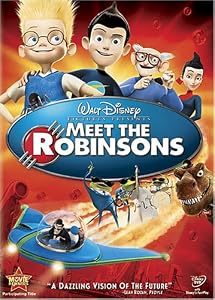
Or take "Meet the Robinsons" (2008), about the family that forms around a young orphan boy genius, in which we find a Single Feisty Female orphan girl genius, whose talents are however directed
entirely towards endearingly impractical ends (she is teaching frogs to sing in harmony), where the hero's genius is directed towards inventing machines that transform society and make him enormous piles of money.  There is one other female character, but the two females never exchange a single line of dialogue and if I remember correctly (and no, I don't propose to rewatch the film to find out) are never on screen together.  The SFF grows up to marry the hero (of course).

In Monsters vs. Aliens (2009), the appealing 50-foot female lead heroine, Susan, saves the world and is converted to feminism on realising what a jerk her ex-fiancĂ©e is.  But every other member of her motley, colourful team of monsters is male, for no obvious reason (they're animated insects and blobs, you could easily give one or two girl names, but no ...); there is almost zero interaction between females at all (aside from Susan, there barely are any female characters).  The movie passes the Bechdel-Wallace test on the strength of a single line, from her mother, who says "Sweetheart, I always knew you'd grow up to - uh - save the world, or something ..."

InceptionImage by Brave Heart via Flickr
For an adult example, consider "Inception" (2010), in which Ariadne, a single female figure,  is (we are told) a better dream architect than the lead male, is the lead male's conscience, guide, helper, etc etc - in fact, is everything but the lead character herself.  But Nolan, the director, does not make films about women; in fact, given his track record, she's lucky she didn't die.  Ariadne's importance lies in her importance to the story of the men in the film, and her effect on the otherwise all-male mission.  She has one short conversation with an ostensibly female character who is, however, really a projection of the subconscious of the (male) protagonist.

To take a well-known and much-loved example, consider The Princess Bride (1987).  It's well-known that the Princess Bride does not pass the Bechdel test. (5) But we do not notice the lack of any interaction between women in the film, because we're distracted by the Single Feisty Femaleness of the title character.

As an exercise to the reader, however, recall the scene after the wedding, when Buttercup is being escorted to the honeymoon suite by the king and queen, Prince Humperdinck's parents.  The queen makes a couple of remarks to the king (thus establishing that she isn't mute, something we otherwise would not know). Buttercup has a brief conversation with the old and very deaf king, thanking him for his kindness to her and telling him she's about to commit suicide.  The queen is a couple of steps ahead, offscreen, during this conversation.  With that scene in mind, here is your exercise:

 Imagine that Buttercup's brief conversation is not with the king but with the queen.  How does that change the scene?  How would it change the entire film, to give Buttercup one scene, however brief, with a supportive female character?

For other egregious examples, consider the popular sub-genre of female-action-figure films: Lara Crofts (2001); Salt (2010);  Aeon Flux (2005).  All of these have strong, in fact ass-kicking, female leads, none of whom ever talk to another female.  There is, not infrequently, no other female
AGENTE SALTImage by alfredituzz :B via Flickr
character in the film to talk to, though there is occasionally a fridged female victim to jar our hero into action (as in Aeon Flux).  But anyone can think of 50 Single Feisty Females without much effort; it's a very old pattern.  (His Girl Friday (1940), anyone?)

The Single Feisty Female is, in all these imaginary worlds, operating in an entirely or all-but-entirely male environment.  All of the other significant characters are male - indeed, all of the characters period may be male.  The writers may honestly feel that they have successfully crafted a female-positive film because there is an important, even central, female character.

However, when that female is alone, in a masculine world, and all of her significant interactions are with men, the message is really that the only interesting stories are those that take place in the world of men. (4)  Women are significant when they are in masculine space,  interacting with men, because stories about men are assumed without argument to be inherently interesting.  A woman interacting with men becomes an honorary man - a significant and interesting character - because of, and for the duration of, that interaction.

But a woman interacting with other women is not interesting.  It's not a story if it doesn't involve a man, in the same way that it's not sex if it doesn't involve a penis (6).  And the Single Feisty Female trope, far from reinforcing positive female role models, reinscribes the dominant paradigm, in which only men's stories matter. (7)

Now, in a television series, with a lot more time and a lot more characters, it is easier to get away from the "Single Feisty Female" trope, because you will (possibly) have more females who can sometimes interact.  But many TV series do not take advantage of this opportunity.  For an analysis of webs of female interaction (or the lack of them) in a few favourite series (Buffy, Xena, Star Trek:TNG; Babylon 5; Angel in the comments) see Gabrielleabelle's charts here, and further charts, revised and with comparisons to networks of male interaction here.  (Buffy the Vampire Slayer, one need hardly add, passes the Bechdel-Wallace test  with ease in every single episode. )

Next post, True Blood and the Single Feisty Female.

----------

Notes

(1) NB the link will send you to a site with a modified version of the test which also stipulates that the female characters should have names.  This is not the original version of the test, and I don't think it's a necessary addition.  It raises the bar on a test that deliberately, for its shock value, sets it low.  And frankly I'd be happy to see a scene in which two unnamed women discuss ammunition, or legal loopholes, or gender stereotyping in the media, as they pass in a hallway.  You won't see these scenes, though.

(2) I've looked through TVTropes and can't find this one, but may have simply been looking in the wrong place.  If anyone can find a TVTrope describing a strong, confident, central female character who is, however, entirely surrounded by male characters and never interacts meaningfully with another female character, often because there are none, please send me the link and I'll edit accordingly.

(4)  Masculine space - so defined by the presence of men rather than women in it -  is generally, I add parenthetically, represented as public space - outdoors, public buildings, outdoor chase and fight scenes.   Domestic space is often not represented, or is represented with women in it, who quickly fall out of the story.

(5) See here (bechdeltest.com) for discussion of whether or not the conversation between Buttercup and the old woman for some reason universally described as "the witch", though all she seems to be is old, poor and ill-kempt, passes the Bechdel-Wallace test.  The general consensus is that it does not, because a) the conversation is about Westley and b) it is only Buttercup's dream in any event, so really a conversation she is having with herself - about a man. )

(6) I really cannot get away from that analogy here; I think that is the underlying association.  A woman interacting as an equal with men has been given an honorary phallus, for the duration of the story.  No phallus, no story. And while "phallus", as post-Freudian feminist analysts have shown, does not have to = "penis", but rather is the abstract quality "ability to function as in independent adult in society", in the orthodoxy of Hollywood film-making, "phallus" still has a one-to-one correspondence with "penis", and penis-owners are therefore the only things worth representing.

(7) It was when my daughter realised this - she was around 8 - that she stopped wanting to watch children's movies, except for anything by Miyazaki, a consistent and honourable exception in his portrayal not only of significant female characters but significant interactions between them.


Enhanced by Zemanta

Sunday, October 3, 2010

A Mary Sue that actually works

On the Universal Mary Sue Litmus Test , by my scoring, Sookie Stackhouse scores 144. Now maybe I scored her a little high on some questions; when I wasn’t sure, I gave her a point. Still, the fact remains that on that test, anything above 50 is scored as “Kill it dead” (i.e. "irretrievable, unrevisable Mary Sueness detected"), and I may have given her 5 extra points, but I sure didn't give her an extra 94 . Sookie is an over-the-top Mary Sue.

Wednesday, September 22, 2010

Sookie is a darling, but she's no Buffy Summers

True BloodImage by §atsukiame via Flickr
Buffy and Sookie are both the One Girl: the ones with an unique Gift. But from there the stories diverge sharply.

Wednesday, September 8, 2010

demographics, or why we parents are doing everyone a favour

Still pursuing this question of what good parents do their culture.  Are we all really just narcissistic jerks having children for our own amusement and benefit, who deserve no assistance in our self-indulgent reproductive agenda?

Here's an article from 2006, on what's going to happen in Canada if the fertility rate - currently between 1.3 and 1.7 - doesn't get up to replacement level.  By 2015, there will be more people over the age of 65 than there will be under age 15.  Graphed by age, Canada's population will look like an inverted pyramid.  Who's going to support the elderly?  That is, us?  Good question.

A couple of bits from the article:


What's most interesting is that the most serious decline in fertility is affecting those whom the nation would most like to see as parents. The highest-paid, highest-educated women are forgetting about motherhood entirely or seriously reducing their number of desired offspring in what has been called a revolution in fertility. ... higher-income, professional women aren't marching with their feet to protest the dearth of truly family-friendly policies; they are responding pragmatically by first delaying child-bearing and then having only one child or remaining childless.

These missing 'family-friendly' policies are precisely the ones that my sister-in-law's childless co-workers object to as 'perks'.  Why should there be family health insurance/ onsite day care/ maternity or paternity leave/ absences to take care of sick children? they argue.  After all, the childless aren't benefitting by these policies, so they're unfair.    In the larger social context of "policies that it might be a good idea to put in place, to persuade women to have children at all", however, these policies make sense.  All working mothers already know what recent research has demonstrated ("Mothering and the Workplace"), that childless women advance faster in their careers; that for women, success in a career vs having children is a choice, and one that they tend to delay making.  Women delay having children,  have fewer children, or have none.  This is demographically a time-bomb.

Margaret Somerville argues that

... delaying or avoiding child-bearing as just another aspect of society's drift toward a culture of "intense individualism," where children are seen more as "a desirable thing to have, rather than as new individuals to repopulate the world."
In a culture driven largely by the rights of adults to reproduce on their own timeline, to have access to the technology that affords reproduction at later ages, to limit reproduction in order to better pursue a career path, what may have fallen by the wayside is the consideration of the greater good for society, Prof. Somerville says.

This may be part of the reason for the lower fertility rates, but Prof. Somerville is missing some practical concerns.  A recent British study found that the reason women were delaying motherhood wasn't because they were being selfish individualists who didn't want to benefit their society, but because they didn't have the money to support one.  It is all very well to say that people ought to be willing to make sacrifices for the good of their society, but when it comes to parenting, at least in Canada, the sacrifices are overwhelmingly made by women. Those that have the opportunity to delay motherhood and thus decrease its negative effects on their careers and lifetime incomes are rationally likely to do that.

The rational social response is to increase the incentives for women to have children.  Increase family-friendly policies in workplaces; subsidize child care and make it well-paid; stop penalizing women for "selfishly taking time off work" for maternity leave; that sort of thing.  If they were doing any of these things in Japan, their current age-demographic graph wouldn't look so much like a mushroom.   As it is, women in Japan are overwhelmingly choosing to have one child, or none.

What are the results of the imploding fertility rates in Japan?  To quote the same article:

The economy will not be able to get enough skilled work force for its manufacturing and services sectors. Labour would become costlier, increasing the cost of production. There will be more elders to tend, straining the medical and pension systems. The social sector expenditure by the Government will have to increase. By 2025, it is expected that there will be two dependents for every three workers. A drastic fall indeed from 1:12 in the year 1950. The dwindling work force would also result in lower purchasing power and reduced demand for goods and services. The domestic market will shrink, production will fall, as will the Government’s revenue, forcing it to manage higher medical and pension expenses with a lower income.
Family-friendly policies are not 'unfair perks for selfish jerks' who self-indulgently decided to pop out a sprog or too.  They're essential to maintain society; to make women willing - and able - to have children and raise them.  Parents are doing a massive social good in bearing and raising children, and it is the job of society to encourage us to carry on the good work.  Otherwise, fewer and fewer of us, particularly women, will choose to do it.
Enhanced by Zemanta

Saturday, September 4, 2010

On the contributions of parents, economic and otherwise, to society

I've been asked to find articles or studies that back up the (to me obvious) contention that parents contribute a great deal to the economy, through their enormous  (and unpaid) contribution in child-rearing labour - that child-rearers are doing something of value, not only for themselves, but for their society.


The notion that parents contribute to society seems self-evident to me, but of course it isn't to everyone.  The prevailing notion, particularly in the US, where child-bearing behaviour, especially in women, is ruthlessly penalized in the workplace, seems to be that those who bear and rear children are not performing a service to society.  Rather, they're selfishly and self-indulgently choosing to indulge in an expensive and time-consuming hobby - on a par with, say, building a sailboat -  that they really shouldn't expect anyone else to cut them any slack for. If you choose to pop out a sprog, it's your business and your problem, seems to be the idea; we'll give you six weeks to get over childbirth, which we are willing to do you the favour of considering a medical condition, albeit a self-induced one, you selfish jerk.  But after that you're on your own.


Wednesday, September 1, 2010

Machismo's cost

The Female Factor - Counting the Cost of Machismo - NYTimes.com

This makes perfect sense to me.  I'm very interested in the evidence that women in the most socially-progressive countries (i.e. with guaranteed maternity leave and subsidized child care) both work in greater numbers, AND have more children.  As if, if they don't have to make a choice between career and children, they don't - they do both.  This is what you would expect but not what anyone predicts.

I know that if I hadn't been able to get a job I would have been nervous about having 2 children, because I would have been concerned about my ability to support them.  But without maternity leave, I would also not have been able to have 2 children.   
Enhanced by Zemanta

Wednesday, July 28, 2010

An Open Letter to Joss Whedon


Dear Mr. Whedon,

I'm delighted, as is everyone, that you are directing The Avengers. We know it will be fantastic, and we can't wait.

I hope that as you make it, you will play to your real strength - love. The center of your shows is love, as you say yourself at the end of "Serenity". The ship - and the show - can't fly without it.


I don't mean romance, couples finding each other, though that can be part of it. I mean the love that moves us all to do our best to care for and safeguard our friends, our families, and our worlds. I mean the love between friends and neighbours and allies and even enemies, when it exists, and when it matters that it does not. I mean your obvious love for every single one of your characters, even the complete rotters; and the love you makes us feel for them in turn.

Love is the warm, beating heart of everything you do best. It was the heart of your masterpiece, Firefly, and of Buffy. Angel was fascinating because it explored what happens when love really isn't there, though the protagonist - whom you loved - desperately wanted it to be. It was developing in Dollhouse, through the surprising moral growth of Topher and Adelle. It's always there, in your best work. 

Sometimes you seem to think that plot or action scenes are your main strength, and what we watch you for. And don't get me wrong: you're great at those and we wouldn't enjoy your work as much if you weren't. But they aren't the point.

The fight scenes in Serenity were great, but they took up so much of center field that they took the focus away from the characters we loved in Firefly. The end of Dollhouse wrapped up the loose plot points very neatly, but it all happened so fast that again we lost something of the characters.  (Though Topher still broke my heart.)

It's a tricky balancing act. You have to have plot. You have to have action. People will complain if you don't. But I hope that while you're working on the Avengers, you remember that we can get fight scenes anywhere. Lots of people write good ones. Half the films out there today are all about the fight scenes. But those films can't do the thing you can do. They can't make us love their characters or care what happens to them. That's what you do better than anyone else.

Show us how you love the characters, and we will love them too. Eye candy and flashy fight scenes and cool plots only matter if we care about the people. Let your love for your characters be the center of the film. Make us care. And then it will be another Whedon masterpiece, and a truly great movie. 

Yours faithfully,


A devoted fan
Enhanced by Zemanta

Friday, July 16, 2010

The Hathor Legacy

The Hathor Legacy

I found this site a year ago and lost it. Phenomenal site on women in popular media.

Also, you know that website I wanted to set up giving Bechdel-Wallace ratings for films, and then, being a lazy slob, I didn't get around to it? Well someone else did! It is here:

http://bechdeltest.com

Everyone go volunteer to contribute, right now. I mean it.

Friday, June 18, 2010

It's mom's fault! Our presuppositions told us so!

Moms' full-time work tied to childhood obesity | Reuters:

Two snippets from this article:

"The current study lacked information on the children's diets and exercise habits, so it is not known whether kids of working moms did in fact have poorer-quality diets or were less active."

And

"However, even if mothers' employment is a factor in the rise of childhood obesity, it would only account for a small portion [at most 8% - ed]of that increase, the current findings suggest."

So, in conclusion: we actually have NO data on whether working mothers affect children's diet and exercise. The effect, if there were one, seems to be small in any case, and there are lots of much more serious issues affecting children's weight. And, now that you mention it, no, it had never occurred to us that children have TWO parents who might, you know, share responsibility for their health ...

Tuesday, May 4, 2010

100 novels, and only 8 women?

The Modern Library "100 best novels of the 20th century" - apparently only 8 women made the cut.

11 women-authored books show up on the "readers' choice" list (on the right), but 4 of them are by Ayn Rand.

Thursday, April 29, 2010

The Curse of the "Good Girl"

My First Rant: Why Can’t Women Keep Up with Men? Try the Curse of the Good Girl � Rachel Simmons

Must get this book and (after reading it) leave it around the house for my daughter to get a look at. She hasn't quite grasped what being a bitch looks like, which is surprising, when you consider that I've been role-modelling that one her entire life ... one thing this book does seem to miss, though (just from reading the description) is the fact that according to what studies there are, being assertive in school and in jobs doesn't actually get women anywhere, which is why, as rational creatures, we don't do it. If a man has a temper tantrum, he's being appropriately manly, and gets a raise and a bigger office. If a woman does, she's being a hysterical bitch and she loses all her credibility (and doesn't get what she wants, either). If a man demands a pay raise, good for him! He knows his worth. Give him the money. If a woman demands a pay raise, who does she think she is? Sideline her, she's "difficult".
So girls may learn to be "good" not just because self-confidence is systematically beaten out of them from puberty onwards, but because being assertive and confident will not get them anything they want, and in fact will be interpreted negatively by teachers, colleagues and employers. Better to learn to sound diffident. And the best way to remember to do that consistently is to BE diffident, and just hope that everyone will be nice to you because really you're not worth very much - if you try hard enough, it's easy enough to believe that.

Thursday, April 15, 2010

Sexism Sinks Sales

This week's letter to the Globe and Mail:

To the Editors:

Corus CEO Cassaday seems to feel some sympathy for his advertiser's impression that if the man of the house isn't watching the show, there's no point wasting advertising dollars on it. ("“Not that many men are that interested in their wives' mascara", How to Look Good Naked? Men Wouldn't Know).  What a pity that he doesn't choose instead to enlighten them on the basic economic fact that women control 80% of all household spending.  If only one person is in front of the tube, advertisers should only pray that it's the lady of the house.   


Yours sincerely.


(a few additional thoughts below, that didn't make it into the letter ...)


Thursday, February 18, 2010

PTSD and Childbirth

Motherhood - Salon.com

This article argues that PtSD comes of a situation in which you're afraid you're going to die. Then it argues that probably mothers never used to get PTSD but now we do because a terrible outcome - the mother dying - is very uncommon these days. However I would argue that this is likely an error, and that PTSD has always been part of childbirth for some of the mothers who survived it, and that it was MORE common, not less, for those who gave birth during any other era but our own. The risk of dying in childbirth was as high as 10% before the modern era; and on top of that was the risk of living but being crippled by it. If PTSD comes of a traumatic event in which the victim has no control, and fears loss of life, why wouldn't childbirth fit the bill? That was exactly the situation in which women found themselves.

But we're not supposed to think that PTSD could result from childbirth because only warriors get PTSD; women are doing something 'natural', which translates - at least for those who haven't done it - as "miraculously easy" - if it isn't, you should feel guilty because you're doing it wrong. As if childbirth does not involve pain, uncertainty and fear, which must be met, just like battle, with submission to circumstances, courage and will.

But no. Only heroes get PTSD, and women risking their lives in childbirth don't get called heroes. So we can't admit that they might have PTSD.